Infrared Heater vs Space Heater: Which Should You Buy? (October 2026)
Choose infrared heat for direct warmth near your seat; choose a ceramic space heater when you want warm air to circulate. The infrared heater vs space heater choice depends on your room, placement and preferred comfort.
On this page (9 sections)
- Infrared heater vs space heater: how do they warm a room?
- Which style fits your room and routine?
- Does infrared or forced air feel more comfortable?
- How do wattage and power settings affect the choice?
- Which controls and safety features matter?
- How should you set up and care for a portable heater?
- What common mistakes should you avoid?
- Which heater should you buy?
- Which infrared heater vs space heater fits your needs?
For the infrared heater vs space heater choice, pick infrared for direct warmth at a nearby seat and ceramic forced air when you want warm air to circulate. The right type depends on where people sit, how the room is used and whether moving air feels comfortable to you.
“Space heater” is a broad term for a portable heater, so an infrared model is also a kind of space heater. In this guide, “space heater” refers to a ceramic forced-air model to make the two heating approaches easier to compare.
The main trade-off is where the warmth goes. Infrared is often most noticeable in its path, while a fan heater pushes warmed air into the room.
For a closer explanation of how infrared heaters work, see our guide.
Infrared heater vs space heater: how do they warm a room?
Infrared heaters warm people and objects in their path; ceramic fan heaters warm air and move it around. That difference shapes where each can feel useful, but neither guarantees an even temperature in every corner.
Infrared can feel direct when you sit within its reach. If you move to a spot out of the path, the warmth may feel less noticeable.
A fan heater sends warm air outward, which can help in a shared space where people sit in different places.
These are two ways of delivering heat, not two kinds of fuel. Both examples here use electricity, and a heater’s output, thermostat setting, runtime and room conditions all affect comfort.
When does infrared warmth make sense?
Choose infrared when you want warmth directed toward one seat, desk or nearby area. It can be a practical fit for a person who stays in one part of a room and prefers not to have a fan moving air across the space.
It may be a poor fit if your main goal is to push warm air into several parts of a room or if the only safe placement leaves your seat outside the heater’s path. Furniture and room layout can block the direct path, so think through the placement before choosing.
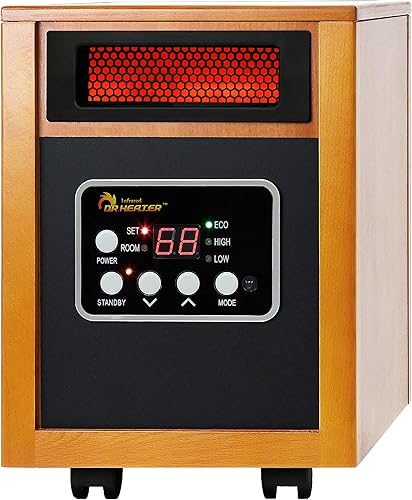
The Dr Infrared DR-968 Heater combines an infrared quartz tube with a PTC element. Its remote, thermostat and timer let you adjust the heat while seated, and caster wheels make it easier to reposition when the room arrangement changes.
When is forced-air heat more useful?
Choose ceramic forced air when you want warm air to move beyond one fixed spot. A tower with oscillation can sweep airflow side to side, which may better suit a shared room than a heater aimed at one chair.
This style may not suit you if you dislike fan noise or moving air. It also needs an open floor location, and a chair, table or wall can affect where its airflow reaches.
For a closer look at the heating approach, read how ceramic heaters work. If you're comparing other heater types, our electric heater guide covers common choices.
Which style fits your room and routine?
Choose by the person’s usual seat, the room’s layout and the space available for the heater. A maker’s coverage figure is a starting point, not a guarantee that warmth will feel even throughout a room.
Start with the distance between the heater and the place that needs warmth. Notice whether a wall, desk or chair could block the infrared path or the fan’s airflow, and leave the required clearance around the heater.
Do you want heat at a desk or chair?
An infrared model can fit a single work area or reading chair if you can position it safely with a clear path toward the person. The Heat Storm Phoenix Heater offers floor or wall placement and two power modes, so it may suit a small office where floor space is tight.
Heat Storm describes this heater for a small room or office. That use case doesn't mean it will warm every corner evenly; room size, drafts and placement still affect what you feel.
Skip a floor-mounted model if you have no stable, clear spot for it. Wall mounting can preserve floor space, but only works when you have a suitable location and follow the manufacturer’s mounting instructions.
Do you want heat to circulate in a shared room?
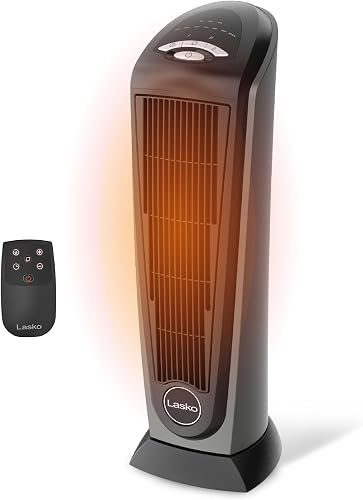
A ceramic tower can work better when people use more than one seating area and you want air to move around. The Lasko 751320 Ceramic Tower oscillates and includes a remote for its heat settings, oscillation and timer.
That makes it a stronger fit for a living room or bedroom where you want to adjust airflow from your seat. Skip it if moving air bothers you or if the only available spot would leave the tower close to furniture, curtains or a walkway.
Will the heater have enough room around it?
Both styles need safe clearance from curtains, bedding, furniture and other objects. Measure the available floor area or wall location, then check the heater’s manual for placement and clearance instructions.
A cabinet heater or tower needs a stable floor position and a cord route that won't become a trip hazard. A wall-mounted infrared model can free floor space, but its location must still aim heat where it is needed and meet the manual’s requirements.
Don't assume a smaller body makes a heater safe to tuck beside a bed or under a desk. If you cannot maintain the required clearance, choose a different location or a different heating plan.
Does infrared or forced air feel more comfortable?
Infrared often feels more direct at a nearby seat, while forced air can feel more spread out when airflow reaches the areas you use. Comfort depends on heater placement, the room and how you respond to moving air.
Some people prefer a still-feeling source of warmth pointed toward their chair. Others prefer a fan that pushes warm air around, especially if more than one person is using the room.
Use the heater as directed and keep its outlet and surrounding area clear. Children and pets should stay away from hot surfaces, cords and the heater’s path, even when a model has protective features.
How do wattage and power settings affect the choice?
Compare wattage and expected runtime to estimate electricity use; the heating label alone does not show which heater will cost less. A thermostat and a lower power mode can affect how long a heater runs at full output.
The Dr Infrared and Lasko models here are rated at 1500 watts. The Heat Storm has 750-watt and 1500-watt modes, which gives you the option of a lower setting when full output is not needed.
At the same wattage, an electric heater uses the same rated power while it is running, whether it uses infrared or ceramic heat. To estimate operating cost, pair the wattage with your electricity rate and expected runtime using our 1500-watt heater cost guide.
Check the circuit before running a portable heater alongside other high-power appliances. Heat Storm says the Phoenix needs a dedicated circuit; our guide to why a space heater may trip a breaker explains a common warning sign.
Which controls and safety features matter?
Choose controls that make it easy to set the heat and a timer, then follow the manual for safe placement and operation. A thermostat can help hold a chosen temperature, while a timer can shut a heater off after a set period.
The Dr Infrared has a thermostat from 50 to 85°F and a 12-hour automatic shut-off timer. The Lasko offers a remote and 7-hour timer, while the Heat Storm includes a remote and thermostat.
Protective features are backup safeguards, not a reason to place a heater near things that can catch fire. Keep it on a stable surface, maintain the specified clearances and avoid an extension cord unless the manual permits one.
When shopping, check whether a model provides tip-over and overheat protection. Read our explanation of space heater tip-over protection to understand what that feature does.
How should you set up and care for a portable heater?
Set the heater on a stable, open surface, route the cord safely and check the manual before its first use. A careful setup helps you keep the warmth where you want it while preserving clearance around the unit.
Before plugging in, choose a location away from curtains, bedding, paper, clothes and furniture. Keep the heater’s intake and outlet unobstructed, and place it where people won't bump it or trip over its cord.
Use the controls to choose a comfortable setting rather than covering the heater or pushing it into a tight corner. If you move a heater, switch it off and follow the manual’s directions for repositioning and wall mounting.
Dust can build up around vents and openings over time. Follow the specific cleaning directions for your model, and make sure the heater is off and unplugged before cleaning; our space heater cleaning guide has more general care advice.
What common mistakes should you avoid?
The most common mistakes are expecting one portable heater to heat every room evenly, ignoring the room layout and overlooking circuit limits. Match the heater to the spot you need to warm and use the manual as the source for setup and operating limits.
A coverage number cannot account for every draft, doorway, ceiling height or furniture arrangement. Choose the heater for the area where you spend time, and change the placement if the heat path or airflow is blocked.
Another mistake is choosing by the word “infrared” or “ceramic” alone. Compare the controls, power options and mounting style, then consider whether a fan or direct warmth better fits your routine.
Finally, don't treat an automatic timer, thermostat or protective feature as permission to leave a heater unattended in an unsafe location. Keep combustible items clear, use a suitable outlet and follow the instructions for your exact model.
Which heater should you buy?
Choose infrared for targeted warmth near a person, and ceramic forced air when you want a fan to circulate heat through a room. Then select a model whose placement and controls suit the room.
Pick the Dr Infrared DR-968 if you want a cabinet-style heater with infrared quartz and PTC elements, a thermostat, remote and timer. Its caster wheels may help if you need to reposition the heater between suitable spots.
Choose the Heat Storm Phoenix if you want two power modes and a wall-or-floor setup for a small room or office. Choose the Lasko tower if oscillating forced-air heat and remote controls fit your shared-room routine better.
If neither style matches your main need, compare a different heating approach in our guide to oil-filled radiator vs space heater.
Which infrared heater vs space heater fits your needs?
For the infrared heater vs space heater decision, pick based on where you want warmth and whether you want moving air. Infrared is the clearer fit for direct warmth at one nearby seat, while ceramic forced air suits people who want airflow to circulate in a shared room.
Choose a heater you can place safely, with controls that fit your schedule and power settings that suit your use. Compare the room layout first, then choose the heating style that makes sense for your daily routine.
Frequently asked questions
Is an infrared heater better than a regular space heater?
An infrared heater may suit you better when you want warmth directed toward people or objects nearby. A fan-based space heater moves heated air around the room, which can suit shared spaces.
Neither style is always better; room layout, distance, airflow and controls affect comfort.
Do infrared heaters heat an entire room?
They can contribute heat to a room, but the feel depends on the heater, room conditions and placement. Infrared warmth is most noticeable along its path, while a forced-air heater circulates warm air.
Check the manual and use the maker's coverage guidance as a starting point.
Which style heats up faster?
Infrared warmth can feel quick when you're in front of the heater because it warms nearby people and surfaces directly. A fan heater also starts blowing warm air quickly, but raising the room's overall temperature takes time.
Drafts, insulation, ceiling height and heater output all matter.
Do infrared heaters use less electricity?
The heating style alone doesn't guarantee lower electricity use. Compare wattage and how long each heater runs at the setting you need; a 1500-watt heater draws the same rated power whether it uses infrared or ceramic heating.
A thermostat and lower power mode can affect runtime.
Can you leave an infrared heater on overnight?
Follow the exact heater manual and don't leave a portable heater running while you sleep unless its instructions explicitly allow that use. Keep it clear of bedding, curtains and other items, and plug it into a suitable outlet.
Tip-over and overheat protection don't replace safe placement.