How Do Infrared Heaters Work?
Infrared heaters warm people and objects directly with radiant heat, then those warm surfaces can help warm the surrounding air. To choose one, match its output and features to the area you occupy and how you want heat to spread.
On this page (10 sections)
- How do infrared heaters work?
- What does an infrared heater warm first?
- Do infrared heaters warm a whole room?
- Do infrared heaters use less electricity?
- How is infrared heat different from convection heat?
- Where should you place an infrared heater?
- Are infrared heaters safe?
- How do you choose an infrared heater?
- What are common infrared heater mistakes?
- Which infrared heater should you choose?
Infrared heaters work by sending radiant heat toward people and objects, warming them directly before the whole room warms. If you're asking how do infrared heaters work, the key buying point is that placement and a clear path affect the warmth you feel.
This makes infrared heat useful near a chair, desk, or other occupied spot. A model with a fan can also move warm air, while a simple radiant unit focuses more on direct warmth.
How do infrared heaters work?
An infrared heater converts electricity into radiant energy that travels outward and warms the surfaces it reaches. People, furniture, floors, and walls can absorb that energy, then transfer some warmth to the surrounding air.
Sunlight through a window can warm your skin or a chair. Infrared heating uses a similar kind of radiant transfer, with the heater as the source.
Portable heaters use different element designs. Some use quartz tubes, while others combine infrared elements with a fan or another heating method.
How do infrared heaters work in a room?
Infrared heaters warm a room through direct radiant heat and heat moving from warmed surfaces into the air. The balance depends on the heater design, room layout, and how much heat the room loses.
A fan can spread warm air farther from the heater. For more on that approach, see how ceramic heaters work.
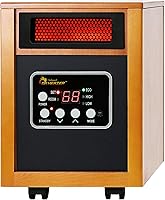
The Dr Infrared DR-968 is a cabinet-style, 1,500-watt heater with a remote, thermostat, and 12-hour timer. It combines radiant and forced-air heating.
What does an infrared heater warm first?
People and objects in the heater's path receive direct radiant warmth first. Air temperature can rise later as warmed surfaces release heat to the room.
Placement matters. A chair facing the heater with an open path may feel warmer than a chair behind a table or around a corner.
Radiant heat doesn't pass through solid furniture or walls. If you move to another part of the room, the direct sensation can change while the heater is running.
Do infrared heaters warm a whole room?
An infrared heater can add warmth to a room, but its direct effect is strongest in the heater's path. Room size, layout, insulation, drafts, and heater output all affect how evenly the space warms.
A closed room with a clear path between the heater and the occupied area may be easier to warm than a large, open, drafty space. Furniture and room dividers can also create cooler spots.
Consider the room and its electrical setup together. Our guide to what space heater you need for 1,000 sq ft explains why room size and heat output matter together.
Do infrared heaters use less electricity?
Infrared heating doesn't use less electricity just because it is infrared. Wattage and run time determine energy use, while targeted warmth may let you focus heat where you spend time.
A 1,500-watt heater running at full power draws 1,500 watts while its heating element is on. A lower setting uses less power but also supplies less heat.
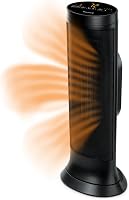
The Heat Storm Phoenix has 750- and 1,500-watt modes. Its lower setting suits a smaller room or office when you want less heat output.
The Dr Infrared DR-998 combines radiant, convection, and forced-air heating. It adds oscillation, a humidifier, a remote, a thermostat, and a timer that can be set from 1 to 12 hours.
How is infrared heat different from convection heat?
Infrared heat warms surfaces directly, while convection heat warms air that moves around the room. Some portable heaters combine both methods.
A fan heater draws in room air, heats it, then moves it back into the space. That can spread heat beyond the heater's immediate path, though drafts or open doors can carry warm air away.
Radiant heat travels toward nearby surfaces, so warmth can feel immediate where you sit. For more on air-based heating, read what a convection heater is.
| Heating method | What warms first | What you may notice |
|---|---|---|
| Infrared or radiant | People and surfaces in the path | Direct warmth where you sit |
| Convection | Room air | Warm air circulating through the space |
| Combination | Surfaces and moving air | Direct warmth with some air circulation |
Where should you place an infrared heater?
Place an infrared heater on a stable surface with a clear path to the area you want to warm. Follow the manual's clearance rules and keep it away from curtains, bedding, furniture, and other items that can burn.
Don't put objects in front of the heater or block its air intake and outlet. Keep cords out of walkways, and use the outlet and circuit specified by the manufacturer.
If you want warmth while seated, aim the heater toward that area. For multiple occupied spots, consider whether a fan-assisted model or another heat source would spread warmth more evenly.
Are infrared heaters safe?
Follow the heater's manual, leave clear space around it, and use a suitable circuit. Tip-over and overheat shutoff features add protection, but careful placement still matters.
Keep portable heaters away from water. Avoid extension cords unless the manual allows one, turn the heater off before moving or cleaning it, and check its cord and plug for damage.
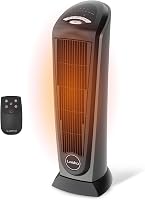
The BLACK+DECKER Infrared Tower has tip-over and overheat shutoff protection. Learn more about tip-over protection on a space heater.
How do you choose an infrared heater?
Choose an infrared heater by matching its output and heat distribution to the space you use. For a chair or desk with a clear path, prioritize direct radiant warmth; for more even circulation, consider a model with a fan or oscillation.
The Dr Infrared DR-968 suits a larger room where a cabinet heater, remote, thermostat, and timer are useful. Skip it if you need a compact wall-mounted unit or low power mode.
The Dr Infrared DR-998 fits buyers who want oscillation and a humidifier along with radiant and forced-air heat. Skip those added features if you want a simpler heater or don't need a humidifier.
The Heat Storm Phoenix suits a small room or office where floor or wall placement and a 750-watt setting are useful. The BLACK+DECKER Infrared Tower suits personal warmth near a desk, with two heat settings and a compact, 5-pound frame.
Before choosing, check the intended placement, wattage, available outlet and circuit, controls, and safety instructions. For a broader comparison of heater types and use cases, see the best electric heaters for home.
What are common infrared heater mistakes?
The most common mistake is expecting direct radiant warmth to reach around furniture or through walls. Place the heater where it has a clear path to the person or area you want to warm.
Another mistake is choosing by room-size claims alone. Room layout, drafts, insulation, and the number of occupied areas affect comfort, so consider how you use the space as well as the heater's output.
Don't block vents or place a portable heater where it can be knocked over. Turn it off before cleaning, and follow the manual for filter care; the DR-968 has a lifetime filter, and the DR-998 has a washable filter.
Which infrared heater should you choose?
Pick the DR-968 for a cabinet heater with a timer and remote, the DR-998 for oscillation and humidification, the Phoenix for wall or floor placement and a lower heat setting, or the BLACK+DECKER for personal desk-side warmth. If you still wonder how do infrared heaters work, remember that they warm the person and surfaces in their path first.
If you want a model comparison, start with the best infrared heaters for indoor use. For a type-by-type decision, see infrared heater vs space heater.
Frequently asked questions
How do infrared heaters work?
Infrared heaters send radiant energy toward people and objects in their path. Those surfaces absorb the energy and warm up, which can then warm nearby air.
The effect is most direct when you have a clear path to the heater, while the room's overall temperature depends on heat loss, room size, and heater output.
Do infrared heaters heat the air?
They heat people and objects directly, rather than relying only on warming air and moving it around. Warmed surfaces can transfer some heat to nearby air, so the room may warm over time.
A fan in a heater can also spread warmed air, but radiant heat is the direct part of the process.
Do infrared heaters use less electricity?
An infrared heater does not automatically use less electricity than another electric heater with the same wattage. Its advantage is targeted warmth: you may be able to heat the area you're using instead of raising the temperature throughout a larger space.
Actual use depends on settings, run time, insulation, and your comfort.
Are infrared heaters safe to leave on overnight?
Use an infrared heater overnight only if its manual permits it and you can follow its clearance and electrical instructions. Keep it on a stable surface, away from bedding, curtains, and other combustibles, and use built-in safety features as a backup.
Don't leave a portable heater unattended while sleeping unless the manufacturer allows it.