Oil-Filled Radiator vs Space Heater: Which Is Better? (October 2026)
Choose an oil-filled radiator for quiet, steady warmth; choose a fan space heater for directed airflow and fast warm-up. Both can use 1,500 watts at full output, so consider how each delivers heat and how you'll use the room.
On this page (9 sections)
- Oil-Filled Radiator vs Space Heater: Which Heats Better?
- Oil-filled radiator vs space heater: which heats better?
- Which one warms you faster?
- Which style feels more comfortable for long use?
- Which heater is easier to move?
- Do oil-filled radiators cost less to run?
- Which type is better for a bedroom or office?
- What safety features should you compare?
- Which heater should you choose?
Oil-Filled Radiator vs Space Heater: Which Heats Better?
Choose an oil-filled radiator for quiet, steady warmth; choose a fan space heater for directed airflow and fast warm-up. In an oil filled radiator vs space heater comparison, both can use 1,500 watts at full output, so consider how heat reaches you.
An oil-filled radiator warms gradually and doesn't use a fan to move air. A ceramic tower pushes warm air into the room, which can feel faster when you first turn it on.
For a room where you sit for hours, steady radiator warmth may suit you. For a brief cold spell or quick spot heat, a fan heater may be a better fit.

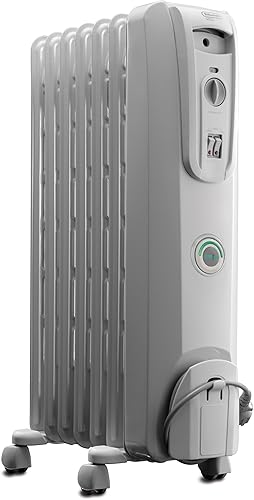
Oil-filled radiator vs space heater: which heats better?
A fan heater can feel faster, while an oil-filled radiator provides quiet, steady heat. Neither style automatically heats a whole room better at the same wattage.
The De'Longhi and DREO radiators in this comparison each have a 1,500W maximum output. The DREO ceramic tower is also rated at 1,500W.
That shared wattage doesn't predict the exact room temperature or how quickly a space will feel comfortable. Room size, insulation, drafts, ceiling height and placement all affect results.
A heater's method shapes what you notice. Fan heat moves warm air toward you, while a radiator warms its surroundings without a fan.
The guide to how convection heaters work explains how moving warm air differs from radiant heat. For another heat-delivery comparison, see infrared heater vs space heater.
Which one warms you faster?
A ceramic fan heater can feel faster after startup because it directs warm air into the room. An oil-filled radiator warms more gradually.
The DREO ceramic model uses a 1,500W PTC element and forced air. It has 70° oscillation to move airflow across a wider area.
That can help when you come in from the cold and want warmth directed toward a chair or desk. A fan also moves heat beyond the heater's immediate position.
An oil-filled radiator doesn't blow warm air at you. Its gradual warmth may suit you during longer, quieter use.
Quick warm air doesn't guarantee a faster rise in the whole room's temperature. A drafty or poorly insulated room can lose heat as quickly as a portable heater supplies it.
Which style feels more comfortable for long use?
Choose the radiator if you prefer quiet, fan-free warmth; choose the tower if you want moving air directed across a room. Comfort is personal, so consider sound and airflow as well as heat.
The De'Longhi radiator is described as quiet and has no fan to stir up dust, pollen and dander. The DREO oil-filled model is described as quiet and includes a mute mode.
The ceramic tower uses a fan and has a listed noise level of 34 dB. Fan noise and airflow may bother you while sleeping or working.
If you use a heater beside your bed, check its controls and timer before relying on it overnight. The space heaters with timers guide covers timer features to consider.
Which heater is easier to move?
The tower weighs less, while the radiators have wheels and handles to help you move them between rooms. Consider where the heater will sit and whether you need to carry it over stairs.
The DREO ceramic tower weighs 2.1 kg and measures 15.79 in high. Its maker advises plugging it directly into a wall outlet and not using an extension cord.
The De'Longhi radiator weighs 23.2 lb and has a handle and wheels. The DREO radiator weighs 17.6 lb and has large wheels and handles.
Radiators take more floor space than a slim tower, and neither type should block a walkway or sit close to fabric. Check the manual for placement and clearance instructions.
For a small room, compare space heaters for small rooms and check the dimensions before choosing. A slim shape doesn't make a heater safe to tuck under a desk or beside curtains.
Do oil-filled radiators cost less to run?
Neither heater type is automatically cheaper to run at 1,500 watts. Energy use depends on the power setting, thermostat cycling and runtime.
At full output, 1,500 watts equals 1.5 kilowatts. Multiply 1.5 by the hours you run the heater, then multiply that result by your electricity rate to estimate energy use cost.
A thermostat can reduce runtime by switching heat on and off as the room changes. The De'Longhi has a ComfortTemp feature, and the DREO radiator offers eco mode and 600W, 900W and 1,500W settings.
The DREO ceramic tower's eco mode adjusts between 1,000W and 1,500W according to its temperature sensor. A lower setting can use less power per hour, but it may take longer to maintain warmth.
Your best cost control is often to heat the room you use and set a comfortable temperature. Use the 1500 watt heater cost guide to estimate your own operating cost.
Which type is better for a bedroom or office?
An oil-filled radiator can suit a bedroom or office where you want quiet, steady heat; a fan tower suits quick warm-ups and directed airflow. Match the choice to your schedule and where you'll sit.
For a long work session, the radiator's quiet operation and lack of fan airflow may be welcome. The De'Longhi has simple controls and 3 heat settings, while the DREO radiator adds a remote, eco mode and a 24-hour timer.
For a cold office you enter briefly, the DREO ceramic heater can send warm air across the room and oscillate. It also has a thermostat, remote control and 12-hour timer.
Keep either heater away from papers, blankets and furniture. Check the manual for clearance and placement rules, and don't run a portable heater where it could be knocked over.
What safety features should you compare?
Compare each model's safety features, then follow its manual for placement and power. A safety feature can help manage a risk, but doesn't make careless use safe.
The De'Longhi has a thermal cut-off and fully enclosed heating elements. The DREO radiator has tip-over protection, overheat protection, a child lock and a burn-proof plug.
The DREO ceramic tower has tip-over and overheat protection, along with an automatic power-off feature. Its maker advises plugging it directly into a wall outlet and avoiding extension cords.
Keep portable heaters on a level, hard surface with the clearance required by the manual. Never cover a heater or place one where a child, pet or passing person can knock it over.
If a heater trips a breaker, don't keep resetting it or move it to an overloaded circuit. Read why a space heater trips a breaker before using it again.
Which heater should you choose?
Pick an oil-filled radiator for quiet, gradual warmth during long stays; pick a ceramic fan heater for directed heat and a lighter heater to carry. Choose by how you use the room.
The De'Longhi EW7707CM suits small to medium spaces, with a sealed oil reservoir, 3 heat settings, a handle and wheels.
The De'Longhi EW7707CM is a straightforward radiator choice if you want simple controls and a sealed oil reservoir.
The DREO Oil-Filled Radiator suits you if you want multiple power modes, a remote and a timer in a radiator format.
For more heat styles, start with the best electric heaters for home. If your choice is specifically between a wall-mounted unit and a radiator, see best wall heaters for indoor use.
Frequently asked questions
Does an oil-filled radiator heat better than a space heater?
Neither type heats every room better. An oil-filled radiator gives quiet, steady warmth that builds gradually, while a fan heater can send warm air toward you quickly.
Room insulation, ceiling height, heater placement and the time you spend there all affect comfort.
Which heater warms a room faster?
A fan heater usually feels faster because it pushes warm air into the room soon after startup. An oil-filled radiator warms more gradually and continues giving off heat as it cools.
For a short visit, quick airflow may matter more than steady warmth.
Does an oil-filled radiator use less electricity?
Not automatically. A 1,500W radiator and a 1,500W fan heater draw similar power while running at full output.
Actual use depends on the setting, thermostat cycling, room conditions and how long you run the heater.
Is an oil-filled radiator safer than a fan space heater?
Safety depends on the exact model and how you use it. Check for tip-over and overheat protection, keep the heater clear of bedding and curtains, and plug it directly into a suitable wall outlet.
Follow the manual and don't leave a portable heater unattended.
Can you leave an oil-filled radiator on overnight?
Follow the heater manual for overnight use, and keep it on a level surface with clear space around it. A thermostat and timer can help manage operation, but they don't replace safe placement, direct wall-outlet use and regular checks.


