How Much Does a 1500 Watt Heater Cost Per Hour?
A 1500 watt heater costs 1.5 times your electricity rate per kWh for each hour at full power. At 16 cents per kWh, that is 24 cents an hour; lower settings and thermostat cycles can reduce actual use.
On this page (10 sections)
- How do you calculate a 1500 watt heater cost per hour?
- How much does a 1500 watt heater cost for a longer run?
- Does a space heater use 1500 watts all the time?
- How can you measure your heater's actual electricity use?
- Can a thermostat lower the running cost?
- How should you set up and use a heater to manage cost?
- How many amps does a 1500 watt heater draw?
- How can you estimate a monthly heater bill?
- What is the simplest way to lower heater costs?
- Which option should you choose for 1500 watt heater cost per hour?
A 1500 watt heater cost per hour is 1.5 times your electricity rate per kWh when the heater runs at full power. At 16 cents per kWh, that comes to 24 cents for one hour.
That gives you a useful starting estimate, but your actual use depends on the heater's setting, how long its heating element runs, and how quickly the room loses heat. You can calculate a rough bill with your utility rate, then use a plug-in meter to measure energy use over a normal stretch of time.
How do you calculate a 1500 watt heater cost per hour?
Multiply 1.5 kW by your electricity rate per kWh to get the full-power hourly cost. Convert your rate from cents to dollars for the calculation, or use the table below.
| Electricity rate | Estimated cost per hour at full power |
|---|---|
| 12 cents per kWh | 18 cents |
| 16 cents per kWh | 24 cents |
| 20 cents per kWh | 30 cents |
| 25 cents per kWh | 37.5 cents |
A 1500W heater draws 1.5 kilowatts while it operates at full power. The conversion is watts divided by 1,000, then multiplied by one hour and your rate per kWh.
Your bill may include charges beyond the energy rate, depending on how your utility calculates it. Use the per-kWh amount that best reflects what you pay for electricity.
How much does a 1500 watt heater cost for a longer run?
Multiply the full-power hourly estimate by the number of hours you plan to run the heater. At 16 cents per kWh, the estimate is 24 cents per hour.
| Run time at full power | Energy used | Cost at 16 cents per kWh |
|---|---|---|
| 1 hour | 1.5 kWh | 24 cents |
| 4 hours | 6 kWh | 96 cents |
| 8 hours | 12 kWh | 1 dollar and 92 cents |
| 30 hours | 45 kWh | 7 dollars and 20 cents |
These figures assume the heater runs at full power for every minute. A lower heat setting or a thermostat that cycles the heating element can bring actual energy use below the estimate.
For a five-hour run at 16 cents per kWh, calculate 1.5 × 5 × 0.16. The full-power estimate is 1 dollar and 20 cents.
Does a space heater use 1500 watts all the time?
No, 1500 watts describes full output, not necessarily the average draw over an hour. A lower setting or thermostat cycle can reduce the time the heater draws full power.
A thermostat may switch the heating element off after the room reaches its target temperature. The fan or controls may still use some electricity during that time, so average use depends on the heater and its operating pattern.
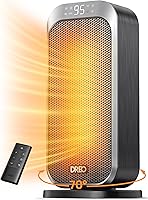
The DREO 1500W Thermostat Heater has a low setting of 1000W, a high setting of 1500W, and an ECO mode that adjusts operation based on ambient temperature. It suits someone who wants multiple heat settings and a timer; skip it if you need a heater with a different output or installation style.
For help choosing among heater styles, see the best electric heaters for home. If you already want a 1500W model, compare options in our guide to 1500 watt space heaters.
How can you measure your heater's actual electricity use?
Use a plug-in watt meter to track a connected heater's power draw and energy over time. Check the meter's load rating and the heater's instructions before connecting them.
The Plug-In Watt Meter displays watts, kWh, volts, amps, frequency, power factor, and cost. Its overload warning can alert you when the connected appliance exceeds the set limit, but you still need to confirm the meter is suitable for the heater.
The Kill A Watt Meter displays kWh and calculates cost forecasts by week, month, or year. It is a useful fit if you want to enter your electricity rate and estimate longer-term running costs; skip it if you only need a quick manual calculation.
Plug the heater and meter into a suitable outlet, and follow the instructions for both devices. Don't use an extension cord or power strip when the heater's instructions require a direct wall connection.
A watts reading shows the draw at that moment. A kWh reading gathered over several hours gives a better cost estimate because the heater may cycle or operate at different power levels.
Can a thermostat lower the running cost?
A thermostat can reduce energy use by switching a compatible heater off when the room reaches your chosen temperature. The actual savings depend on room conditions, your target temperature, and how often the heater needs to run.
The DIGITEN Plug-In Thermostat uses a remote controller with a built-in temperature sensor and has heating and cooling modes. Its stated maximum load is 1800W, so check the heater, outlet, and thermostat compatibility before using them together.
This outlet suits someone who wants temperature control with a separate remote sensor. Skip it if you can't confirm that your heater and electrical setup are compatible, or if the heater's instructions don't allow an external thermostat.
A thermostat doesn't guarantee a particular bill reduction. The room's heat loss and your chosen setting determine how often the heater needs to turn back on.
How should you set up and use a heater to manage cost?
Use the heater in the room you occupy, and set it to the lowest comfortable temperature. Close the door to limit heat loss, place the heater according to its instructions, and turn it off when the room is empty.
Keep the heater clear of furniture and other items, and plug it directly into a suitable wall outlet when the instructions require it. A watt meter can help you compare a normal run with your estimate, while a thermostat can limit unnecessary heating.
For a useful reading, record the meter's kWh before and after a typical period of use. Keep the same heater setting and room conditions during the comparison so you can make sense of the difference.
How many amps does a 1500 watt heater draw?
At 120 volts, a 1500 watt heater draws about 12.5 amps at full power. Estimate the current by dividing watts by volts: 1500 ÷ 120 = 12.5.
Actual current can vary with supply voltage and operating mode. Check the appliance label and your home's circuit information, especially if other high-draw devices share the circuit.
Read how many amps a space heater uses before choosing a circuit. If a heater repeatedly trips a breaker, review why a space heater trips the breaker and stop using any setup that feels hot, smells burnt, or shows damage.
How can you estimate a monthly heater bill?
Multiply kW by hours per day, days used per month, and your rate per kWh. A 1500W heater used 4 hours a day for 30 days uses 180 kWh at full power.
At 16 cents per kWh, that is 28 dollars and 80 cents. This is a full-power estimate, so a lower setting or thermostat cycling may reduce actual use.
You can also use meter readings: record kWh at the beginning and end of a normal period, then multiply the difference by your electricity rate. This accounts for the heater's actual cycling during that period.
What is the simplest way to lower heater costs?
Limit heating to the occupied space and avoid running the heater longer than needed. Close doors, choose the lowest comfortable setting, and switch the heater off when you leave.
Common cost-estimate mistakes include treating the heater's maximum wattage as its average use, forgetting to convert watts to kilowatts, and multiplying by the wrong electricity rate. For a useful estimate, use 1.5 kW only for the hours the heater runs at full power, or use measured kWh for a normal period.
Which option should you choose for 1500 watt heater cost per hour?
Choose a meter if you want measured use, a thermostat if you want automatic temperature control, and a heater with lower settings if you want an output choice. The right option depends on whether you need a cost estimate, less manual control, or a heater itself.
Choose the Plug-In Watt Meter for viewing several electrical readings, or the Kill A Watt Meter if cost forecasts over longer periods are your priority. Consider the DIGITEN thermostat only after confirming compatibility, and choose the DREO heater if its listed settings and features suit your room and routine.
For a quick estimate, multiply 1.5 kW by full-power hours and your electricity rate. For a closer 1500 watt heater cost per hour, measure actual kWh over a typical run and review how many amps a space heater uses.
Frequently asked questions
How much does it cost to run a 1500 watt heater for 8 hours?
At full power, an 8-hour run uses 12 kWh because 1.5 kW multiplied by 8 hours equals 12 kWh. Multiply 12 by your electricity rate.
At 16 cents per kWh, the estimate is 1 dollar and 92 cents.
A thermostat or lower setting can reduce actual use.
Does a 1500 watt heater always use 1500 watts?
No. It uses 1500 watts only while drawing power at full output.
A lower heat setting, thermostat cycling, or an eco mode can reduce average use over time.
Check the heater's power settings or measure its consumption during normal use for a closer estimate.
How do I calculate my heater's cost per month?
Multiply the heater's kilowatt draw by hours used per day and days used per month, then multiply by your electricity rate per kWh. For example, 1.5 kW for 4 hours a day over 30 days is 180 kWh.
At 16 cents per kWh, that is 28 dollars and 80 cents.
Can a plug-in watt meter measure a space heater?
A plug-in watt meter can show power and energy use for an appliance connected through it. Check the meter's voltage and load limits, and follow the heater and meter instructions.
For a high-power heater, make sure the meter is rated for the load and plug it directly into a suitable outlet.