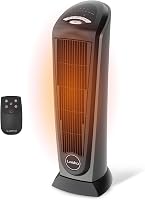
How Do Ceramic Heaters Work?
Ceramic heaters warm a ceramic element with electricity, then use a fan to move the heated air into the room. They can warm you quickly nearby, but they don't create heat without using electricity.
On this page (8 sections)
- How do ceramic heaters work?
- How does a ceramic heater warm a room?
- Does a ceramic heater use less electricity?
- How is a ceramic heater different from an infrared heater?
- What should you look for in a ceramic heater?
- Are ceramic heaters safe to use?
- What are the limits of a ceramic heater?
- How do ceramic heaters work, and which type should you choose?
Ceramic heaters work by using electricity to warm a ceramic element, then blowing air across it to carry heat into the room. The element heats quickly, and the fan helps spread warmth beyond the heater itself.
The term describes the heating element, not one exact shape or set of controls. Ceramic heaters come as compact units, tower heaters, and other designs, with different heat settings, thermostats, timers, and safety features.
How do ceramic heaters work?
Electric current heats the ceramic element, and a fan pushes room air over it. The warmed air then leaves through the heater's outlet and mixes with cooler air in the room.
Many ceramic heaters use a positive temperature coefficient, or PTC, element. Its electrical resistance changes as it heats, which can help regulate its temperature.
The heater still relies on its controls and built-in protections, so follow its manual and don't block the air intake or outlet.
A thermostat can switch heating on and off around a selected temperature. A fan may keep circulating air while the element cycles, depending on the model.
How does a ceramic heater warm a room?
A fan-forced ceramic heater warms air and circulates it around the room. It often makes the space near its outlet feel warmer first, while the rest of the room takes longer to warm.
Heat spreads through air movement and natural mixing. Furniture, open doorways, drafts, insulation, and room size all affect the result, so a heater's stated coverage is only a guide.
For a clearer picture of how heater types differ, see our guide to choosing an electric heater for your home. If you want to estimate the electrical load, read how many amps a space heater uses.
Does a ceramic heater use less electricity?
A ceramic heater's electricity use depends mainly on its wattage and how long it runs. Ceramic construction doesn't make a heater with a given wattage use less power than another electric resistance heater running at the same wattage.
A 1,500-watt heater running continuously uses 1.5 kilowatt-hours each hour. A thermostat can reduce total use by switching the heating element off when the room reaches its set temperature, though the amount of electricity saved depends on the room and settings.
Use a lower heat setting when it keeps you comfortable, and heat the room you're using. For an example cost calculation, see how much a 1,500-watt heater costs per hour.
How is a ceramic heater different from an infrared heater?
Ceramic heaters usually warm air, while infrared heaters deliver radiant heat to people and objects. That difference affects how warmth feels and how it spreads.
A ceramic heater with a fan can circulate warmth through the room, but it may create some airflow or fan noise. Infrared heat can feel direct on the area it reaches, without depending on a fan to carry warmth through the space.
Compare the two approaches in our guide to how infrared heaters work. For a broader comparison of room-heating styles, see what a convection heater is.
What should you look for in a ceramic heater?
Choose a heater based on room size, controls, placement, and the safety features you need. A high heat setting may suit a larger or colder room, while a smaller space may be comfortable with a lower setting.
Look for a thermostat if you want to set a target temperature. A timer can help limit scheduled run time, while oscillation can move airflow across a wider area.
Check the manual for clearance, outlet, and extension-cord guidance before placing or powering any heater.
These examples show different ceramic-heater formats and controls:
Are ceramic heaters safe to use?
Use a ceramic heater on a stable, level surface, with its air openings clear and the manual's clearances followed. Keep it away from bedding, curtains, paper, and other materials that can catch fire.
Some models include tip-over switches or overheat protection, but those features don't replace careful placement and use. Plug the heater into an outlet as its manual directs, and stop using it if the plug, cord, or heater is damaged.
Read our guide to whether ceramic heaters are safe for placement and operating precautions. If a heater repeatedly trips a breaker, see why a space heater trips the breaker.
What are the limits of a ceramic heater?
A ceramic heater can warm a nearby area quickly, but it may not heat a large or drafty space evenly. Its warmth also depends on continued electricity, unlike a heat source that stores warmth after its power is off.
A fan can move dust around, and some people prefer a heater without airflow. The heater's thermostat may also measure temperature near the unit rather than at the far side of a room.
How do ceramic heaters work, and which type should you choose?
Ceramic heaters work by heating an element with electricity and using airflow to spread its heat. Choose a fan-forced ceramic model if you want warmth circulated through the room, and consider infrared if you prefer direct radiant warmth.
Compare heat settings, thermostat controls, timer options, placement needs, and safety features before choosing. For a smaller room, start with our guide to space heaters for small rooms.
Frequently asked questions
How do ceramic heaters work?
A ceramic heater uses electricity to heat a ceramic element. A fan moves air across the warm element and circulates that air into the room.
Many models also have a thermostat that cycles the heat to maintain a chosen setting, though controls and fan operation vary by heater.
Do ceramic heaters heat a room or just a person?
Fan-forced ceramic heaters warm the air around them, so they can heat a room over time. They also make the nearby area feel warmer sooner because the fan directs heated air outward.
Room size, insulation, ceiling height, and heater output affect how well that works.
Are ceramic heaters energy efficient?
Ceramic heaters convert electricity into heat at the point of use, but that doesn't make them cheaper to run than other electric resistance heaters with the same wattage. A thermostat and lower heat setting can reduce how long a heater runs.
Your electricity rate and usage determine the cost.
Is a ceramic heater the same as an infrared heater?
No. A ceramic heater typically warms air with a heated element and fan, while an infrared heater sends radiant heat toward people and objects.
Ceramic heat can circulate through a room; infrared warmth is more direct, so the better fit depends on how you use the space.