Programmable Space Heaters: What to Look For
The best programmable space heater for you depends on whether you need a schedule, a target temperature, or both. Compare those controls first, then choose a heater style that fits your room and follow its safety instructions.
On this page (8 sections)
- What does programmable mean on a space heater?
- Which programmable space heater control should you choose?
- Which programmable space heater features matter most?
- How should you choose a heater style for your programmable space heater?
- Can programmable space heater controls lower energy use?
- How do you set up and care for a programmable space heater?
- What common programmable space heater mistakes should you avoid?
- Which programmable space heater should you choose?
A programmable space heater can follow a time schedule, respond to a room temperature, or do both. Choose the control that fits your routine, then compare heat style, safety features and placement needs.
“Programmable” can describe different functions. A timer responds to the clock; a thermostat responds to temperature.
A remote or app may make adjustments easier, but it only schedules heat if the heater has a scheduling feature.
If you want to compare timer types, start with our guide to space heaters with timers. For a broader look at heater styles, see how to choose the right electric heater type.
What does programmable mean on a space heater?
A programmable space heater may have a timer, a thermostat or both. Check whether it can set operating hours, target a temperature, or only run for a set period before switching off.
A 24-hour timer lets you plan operation by time of day. An auto-off timer counts down from when you turn on the heater, so it may not support a repeating schedule or automatic start.
A thermostat lets you choose a temperature. The heater responds as the room warms or cools, though the way it cycles depends on the model.
Heat levels and modes change how much heat the unit provides. Remote, app and voice controls change how you access settings.
These features are useful only when they solve a problem you have, such as adjusting a heater across the room or setting a routine.
Which programmable space heater control should you choose?
Choose a timer for predictable hours, a thermostat for a target temperature, or both if you need both kinds of control. Check the manual for the exact functions because “timer” can mean several things.
| Control | What it does | Best fit |
|---|---|---|
| Countdown timer | Stops operation after a chosen period | A planned session with a set end |
| Daily or 24-hour timer | Sets operation by time of day | A regular routine |
| Programmable thermostat | Responds to a selected temperature | Maintaining a comfort target |
| Remote control | Changes settings from a distance | Adjusting the heater without walking over |
| App or voice control | Adjusts supported settings through connected controls | Remote access and smart scheduling |
A timer does not always mean the heater can turn itself on later. Confirm whether it supports delayed start, a daily schedule, auto-off, or a combination.
A remote control is also not a schedule. It lets you change settings from a distance, but the heater still needs a timer or thermostat to act on its own.
See our guide to space heaters with remote control if that feature matters to you.
Which programmable space heater features matter most?
Prioritize the controls you'll use, safety protections and a heater style that suits the room. A long feature list adds little if you won't use those options or the heater doesn't fit your space.
Is a thermostat or timer better in a programmable space heater?
A thermostat is the better fit when you care about a temperature target, while a timer suits a routine with known start and stop times. If you want both, confirm that both features are present and learn how they work together.
The De'Longhi Dragon Digital Heater combines an adjustable thermostat with a 24-hour timer and a digital control panel. Its oil-filled radiator design is a practical choice if you want quiet heat without a fan, but skip it if you need a lightweight heater to carry often: it weighs 26.6 lb.
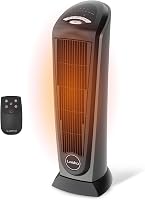
The Honeywell HeatGenius Heater has a programmable thermostat, six heat settings and a 2-hour auto-off heat phase timer option. It suits someone who wants several heat choices in a portable ceramic heater, but skip it if you need a repeating daily schedule from the timer.
What safety features should a programmable space heater have?
For a portable floor heater, look for overheat protection and tip-over shutoff, then follow the manual's instructions on clearance, outlets and supervision. Programming does not make unsafe placement safe.
The Honeywell HeatGenius includes tip-over protection, three overheat protections, thermal-insulated wiring and cool-touch plastic housing. The De'Longhi Dragon Digital Heater has a child lock and thermal cut-off, while the Ballu Mica Panel Heater has tip-over auto shutoff and overheat prevention.
The Ballu suits buyers who want app access, voice control and flexible placement, since it can stand on its wheels or mount on a wall. Skip it if you only need a basic timer or thermostat and won't use connected controls.
Read what tip-over protection does before relying on that feature, and see are ceramic heaters safe? for more on ceramic models.
Can a plug-in thermostat control a programmable space heater?
A plug-in thermostat can add temperature-based switching to a compatible appliance, but both devices must allow the setup. Check the instructions and electrical limits before connecting anything.
The DIGITEN Plug-In Thermostat has a remote temperature sensor and switches an appliance around a target temperature. Its maximum load is 15 A and 1,800 W, but those ratings alone don't confirm that a particular heater and thermostat work safely together.
The remote and receiver should be in the same space when used. The remote requires 2 AAA batteries, which aren't included.
Skip this add-on if your heater's instructions prohibit external controls or if you can't verify compatibility.
How should you choose a heater style for your programmable space heater?
Choose the heater type for the room and the kind of warmth you want, then pick the timer or thermostat. Controls don't change how a heater delivers heat.
An oil-filled radiator warms its surface and circulates heat through the room. The De'Longhi Dragon Digital Heater is a match for buyers who prefer quiet operation without a fan and want both thermostat and scheduled timer controls.
Its permanent oil reservoir doesn't need refilling, but its 26.6 lb weight makes it less convenient to move frequently.
Ceramic heaters use a heating element and fan to move warm air. The Honeywell HeatGenius is a better fit if you want six heat settings and a programmable thermostat in a 5.8 lb unit; choose another model if fan-free operation or a daily timer is essential.
The Ballu Mica Panel Heater combines mica far-infrared warmth with convection. Its programmable thermostat, 24-hour timer and app controls suit buyers who want more ways to manage a larger room, plus stand or wall-mount placement.
Skip it if you don't want connected features or a wall-mounted option.
Room size, insulation and drafts affect how well a heater can warm a space. Don't assume a model's coverage claim guarantees comfort in every room.
Use our space heater sizing and power guide to consider wattage and room needs.
Can programmable space heater controls lower energy use?
A timer or thermostat may reduce unnecessary runtime, but programming alone doesn't guarantee lower energy use. Wattage, runtime and your electricity rate all affect consumption.
A schedule can help avoid heating an empty room. A thermostat may stop or reduce heating after the room reaches its target, depending on how the heater controls its output.
Check wattage and the circuit before using a heater. A 1,500 W model draws substantial power while heating, so don't overload the circuit or share an outlet with other high-power appliances.
For an estimate based on wattage and runtime, see how much a 1,500-watt heater costs to run.
If the breaker trips, turn off the heater and follow our guide to why a space heater trips the breaker. Don't keep resetting a breaker while the cause is unknown.
How do you set up and care for a programmable space heater?
Set up a programmable space heater by following its manual, choosing a stable location and confirming its controls while you're present. Keep it clear of bedding, curtains, furniture and anything that can block airflow or touch hot surfaces.
Use a wall outlet if the manual requires it. Avoid extension cords unless the manufacturer explicitly permits one, and keep the plug and controls accessible so you can turn the heater off quickly.
Start with a conservative timer or thermostat setting. Check that the heater switches off or changes operation as expected before relying on the setting.
A schedule isn't a substitute for supervision when the manual requires you to stay nearby.
Keep the heater and its air openings clean according to the manual. Unplug it and let it cool before cleaning; don't pour or spray water onto electrical parts.
For step-by-step care, see how to clean a space heater.
If children or pets can reach the heater, consider its housing and placement guidance. The De'Longhi Dragon Digital Heater has a child lock, and the Honeywell HeatGenius has cool-touch plastic housing, but those features don't remove the need for a safe location.
What common programmable space heater mistakes should you avoid?
The most common mistakes are confusing a countdown with a schedule, assuming a thermostat is a timer, and ignoring outlet or placement instructions. Check the actual controls and operating limits before setting a routine.
Don't assume that a remote, app or voice assistant means the heater can turn on automatically. Look for a stated schedule function, and verify whether it supports automatic start or only changes settings while the heater is on.
Don't treat a plug-in thermostat's wattage rating as proof that it's compatible with every heater. Follow both manuals, including any direction against external controls.
Don't place a heater where curtains, bedding or furniture can touch it or block airflow. Don't use a programmable setting to run a heater unattended unless the manufacturer says that use is safe.
Which programmable space heater should you choose?
Choose the De'Longhi for quiet radiator heat with a 24-hour timer, the Honeywell for multiple heat settings with a programmable thermostat, or the Ballu for app control and flexible placement. Consider the DIGITEN thermostat only when the heater's instructions permit external controls.
The De'Longhi is the clearest fit for buyers who want an oil-filled radiator and both time and temperature controls. Skip it if you need something light to move between rooms.
The Honeywell suits buyers who want a portable ceramic heater, six heat settings and a programmable thermostat. Skip it if a repeating daily schedule is a must-have.
The Ballu fits buyers who want a programmable thermostat, app scheduling and stand or wall-mount options. Skip its connected controls if you'll only use basic settings.
The DIGITEN can suit a compatible appliance that lacks temperature-based switching, but don't use it when compatibility is uncertain.
Pick the control first, then match the heater to your room, placement and operating routine. For other schedule options, browse our space heater timer guide, and check the heater manual before programming it.
Frequently asked questions
What does programmable mean on a space heater?
Programmable can mean a timer that sets when a heater runs, a thermostat that targets a temperature, or both. Check the controls carefully: a countdown or auto-off timer may only stop the heater after a set period, while a thermostat responds to room temperature.
Is a programmable thermostat the same as a heater timer?
No. A timer schedules operation by time, while a thermostat responds to temperature.
Some heaters include both, but a timer alone cannot keep a room at a chosen temperature, and a thermostat may not offer a weekly schedule.
Can a plug-in thermostat control a space heater?
A plug-in thermostat can switch a compatible heater on or off around a target temperature, but check the thermostat's load rating and the heater's instructions first. Don't use one if the heater maker says not to, or if the combined setup isn't approved.
Which safety features should a programmable space heater have?
Look for overheat protection and, for a portable floor heater, tip-over shutoff. Follow the manual's clearance and outlet instructions, keep the heater away from fabric and water, and never leave it running unattended unless the manufacturer says that use is safe.
Do programmable space heaters save energy?
A schedule or thermostat may help avoid heating an empty room or overshooting a comfortable setting, but it doesn't guarantee lower energy use. A 1,500-watt heater uses power while its heating element runs, so runtime and your electricity rate affect consumption.