What Space Heater Do You Need for 1,000 Sq Ft?
A space heater for 1,000 sq ft usually means a whole-home system or a professionally planned set of heating zones. A standard 1,500-watt portable heater is for supplemental warmth in one room, so match its coverage to the space you occupy.
On this page (9 sections)
- Can one space heater heat 1,000 sq ft?
- What changes the heating needs of a 1,000 sq ft home?
- How do you choose a space heater for 1000 sq ft?
- How much electrical capacity do multiple space heaters need?
- How should you set up and use a room heater?
- What care does a portable heater need?
- What mistakes make a space heater less useful?
- What should you do if 1,000 sq ft still feels cold?
- Which space heater should you choose for 1,000 sq ft?
A space heater for 1,000 sq ft usually means a whole-home system or a professionally planned set of heating zones. A standard 1,500-watt portable heater is for supplemental warmth in one room, not steady heat throughout a large home.
If you need warmth in just one occupied area, choose a heater whose stated coverage includes that room. A heater's range is a starting point, not a promise that it will maintain one temperature across every corner.
Start with the building's insulation, ceiling height, layout, climate, and existing heating system. For more detail on what this common power level can do, read our guide to 1500-watt space heaters.
Can one space heater heat 1,000 sq ft?
Usually, no: one standard portable heater is not a practical way to heat 1,000 sq ft evenly. It can add warmth near the unit, but walls, closed doors, airflow, and heat loss limit how much of that warmth reaches distant rooms.
Wattage describes the heater's electrical input. It doesn't tell you that a unit can keep a particular area at a set temperature in every home.
Coverage varies by model and room conditions. The DREO 25 Inch Tower Heater is rated for 100–270 sq ft, while the DREO 30 Inch Oscillating Heater is rated for up to 300 sq ft.
Those figures suit room-level planning, not a claim that either heater can warm 1,000 sq ft. An open floor plan may let warm air travel farther than a home with several closed rooms, but the edges of a large space can still feel colder.
If you want steady warmth across a whole home or large open area, use a properly sized central system or ask an HVAC professional to assess the heat loss and possible zones. A portable heater can supplement that system in a room where you spend time.
What changes the heating needs of a 1,000 sq ft home?
Floor area alone can't tell you how much heat a home needs. Insulation, air leaks, windows, ceiling height, outdoor temperatures, and the way rooms connect all affect how quickly heat escapes and where it can travel.
A well-insulated room with a low ceiling may feel warmer than a drafty room of the same size. A tall, open room holds more air, while closed doors can keep a heater's warmth from reaching other rooms.
Before shopping, consider these questions:
- Which rooms need extra warmth? One occupied room is a more realistic target for a portable heater than several rooms spread across a home.
- How does the room lose heat? Drafts and poorly sealed windows can make a heater work harder to maintain comfort.
- How tall are the ceilings? A taller room has more air to warm, and heat can collect higher up.
- Can air move between the spaces? Closed doors limit how far warm air travels.
- What does the main system already handle? A portable heater may help with a cold spot while the main system heats the rest of the home.
If one room is consistently colder, check for blocked vents, drafts, or a heating-system issue before buying a larger portable model. For a cold lower level, our guide to heating a basement with a space heater covers layout and practical considerations.
How do you choose a space heater for 1000 sq ft?
Choose a heater for the individual room you want to warm, then plan whole-home heat separately. For a room-level purchase, compare stated coverage, heater style, controls, noise, portability, and the safety features that fit your household.
Start with coverage. A stated range of 100–270 sq ft or up to 300 sq ft can help narrow the options for one room, but it doesn't guarantee the temperature you'll get.
A drafty room may need more help than an enclosed, well-insulated one.
Next, decide how you want heat to reach you. A tower heater with a fan and oscillation moves warm air around its immediate area.
An oil-filled radiator gives off radiant warmth without a fan stirring air, but it is heavier and is better suited to a location where you can leave it set up.
Think about how you'll control it. A remote can help if you want to adjust a unit from a bed or chair.
A timer lets you set a shutoff period.
An adjustable thermostat can help keep a room near a chosen temperature. Features vary, so check the controls for the specific model you're considering.
Also consider whether the heater has a stable, clear place on the floor near a suitable outlet. A tall tower may fit a narrow space, but it still needs the clearance required by its instructions.
A heavier radiator is less convenient to move between rooms.
For a broader comparison of heater styles, read how electric heaters differ by type. If you expect to use a unit in a bedroom, our guide to space heaters for small rooms can help you compare room-focused options.
Which space heater for 1000 sq ft fits your room?
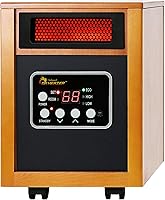
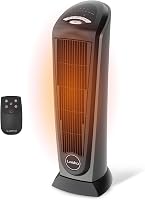
A space heater for 1,000 sq ft is not the right category for any one of these four portable models. Each can make sense as a room-level supplement, depending on the controls and heating style you prefer.
Skip these models if your goal is to heat all 1,000 sq ft with one portable appliance. They are also a poor fit if the only available outlet or circuit can't safely support the heater, or if there isn't a clear location that meets the unit's placement instructions.
How much electrical capacity do multiple space heaters need?
There is no dependable wattage formula based only on a 1,000 sq ft floor plan. Choosing the number of portable heaters from a simple area rule can miss the home's heat loss and put too much load on household circuits.
A common portable heater uses 1,500 watts. At 120 volts, that's about 12.5 amps, which can take up a large share of a household branch circuit's capacity.
Check the heater's electrical label and the circuit rating. Also account for other appliances connected to the same circuit, since outlets in separate rooms may share one circuit.
Don't assume that two heaters are safe just because they're plugged into different rooms. If both draw power from one circuit, their combined load can trip a breaker or create an unsafe condition.
Read how many amps a space heater uses before considering more than one unit. If you need supplemental heat in several areas, have a licensed electrician or HVAC professional assess the circuits and heating options.
How should you set up and use a room heater?
Place the heater on a stable, level floor near an appropriate wall outlet, with the clearance its instructions require. A careful setup helps keep the unit away from items that could block airflow or catch heat.
Before switching it on, read the manual for its clearance, controls, and safety guidance. Keep the heater clear of bedding, curtains, furniture, clothing, paper, and other combustible items.
Plug it directly into a suitable wall outlet. Avoid extension cords and power strips unless the manufacturer specifically permits them, and don't run the cord under rugs or where people can trip over it.
Use the thermostat or heat setting to warm the occupied room rather than trying to push air through a whole home. Oscillation can spread airflow within a room, but it won't make a portable heater a substitute for a whole-home system.
Turn the unit off when leaving the room or going to sleep unless its instructions specifically support the intended use. Keep children and pets from touching or playing near a hot heater, and use a child lock if the model has one.
Stop using the heater if a plug, cord, or outlet becomes hot, or if a breaker trips. Don't keep resetting the breaker without addressing the cause.
Our guide to space heaters tripping breakers explains what to check next.
What care does a portable heater need?
Follow the manual's care instructions, and keep dust and objects from blocking the heater's air openings. Unplug the unit and let it cool before cleaning it or moving it.
For a fan heater, inspect the intake and outlet for dust when the unit is off and cool. Clean only as the manual directs, and don't put water or cleaning spray into the heater.
Keep the surrounding floor clear, especially when the heater is in a room used for storage. Before putting a portable heater away, unplug it, let it cool, and store it in a dry location.
An oil-filled radiator has a permanently sealed oil reservoir, so it doesn't need refilling. Its weight also makes it less convenient to carry up stairs or move repeatedly, so choose a regular location that gives it safe clearance.
For a step-by-step cleaning approach, see how to clean a space heater. A heater that has a damaged cord, plug, or housing should not be used until it's been checked according to the manufacturer's guidance.
What mistakes make a space heater less useful?
The biggest mistake is expecting a room-level portable heater to warm an entire 1,000 sq ft home. Other common mistakes are choosing by wattage alone, ignoring the circuit, and placing the unit where its airflow is blocked.
Avoid these buying and use errors:
- Using a coverage number as a guarantee. Room shape, drafts, insulation, and ceiling height change how much warmth reaches you.
- Buying for the whole floor plan when you need one room. Pick the room you occupy most, then match the stated coverage and controls to that use.
- Running multiple units without checking circuits. Separate outlets may share a circuit, and other appliances add to the load.
- Using an extension cord or power strip without approval. Follow the manufacturer's instructions and use an appropriate wall outlet.
- Putting a heater close to fabric or clutter. Keep the space around the unit clear and follow its required clearances.
- Ignoring the reason a room is cold. Drafts, blocked vents, or a system problem can make a new heater less effective than expected.
A breaker trip, a hot plug, or a hot outlet is a reason to stop and check the setup. Don't try to compensate for a cold house by adding heaters without understanding the electrical capacity and heat loss.
What should you do if 1,000 sq ft still feels cold?
Look for heat loss or a heating-system problem before adding more portable heaters. Cold rooms can point to drafts, weak insulation, blocked vents, or a system that needs repair or professional sizing.
Check that supply and return vents are open and clear. Look for noticeable drafts around doors and windows, and confirm that the thermostat and filter are in good working order according to the system instructions.
If the whole area stays cold, arrange an HVAC assessment. A professional can evaluate the building's heat loss and recommend whether the existing system needs repair, adjustment, or a separate zone.
If only one occupied room needs extra warmth, select a portable heater with a stated coverage range that includes that room. Use our guide to space heater power and sizing to compare wattage and room use.
Which space heater should you choose for 1,000 sq ft?
For 1,000 sq ft, choose a properly sized whole-home system or a professionally planned multi-zone setup. Choose a portable heater only when you need supplemental warmth in one room and can provide a suitable outlet and safe placement.
Pick the DREO 25 Inch Tower Heater for a room where its stated coverage and oscillation fit your needs. Its remote can help you adjust the unit from a bed or chair.
Choose the Lasko 5586 if you want two heat settings and an 8-hour timer, or the DREO 30 Inch Oscillating Heater if its wider oscillation and coverage suit the room. Pick the De'Longhi radiator for fan-free warmth in a small to medium space where you can leave it in place.
If the cold area is a basement, start with our basement space heater guide. For broad, even heat across 1,000 sq ft, have the home's heating needs and electrical setup assessed before adding portable heaters.
Frequently asked questions
Can a 1,500-watt space heater heat 1,000 sq ft?
A single 1,500-watt heater is a supplemental heater for one room, so it is unlikely to heat 1,000 sq ft evenly. Insulation, drafts, ceiling height, room layout, and outdoor temperature all affect how warm the area feels.
Use the home's main heating system or ask a professional about a suitable multi-zone plan.
How many space heaters would it take to heat 1,000 sq ft?
There is no safe heater count based on floor area alone. Several 1,500-watt heaters can overload circuits, and each unit warms its nearby area more effectively than distant rooms.
Have a qualified electrician or HVAC professional assess the circuits and heating needs before planning several units.
What size room can a 1,500-watt space heater heat?
The useful room size depends on the heater's stated coverage and the room itself. Drafts, weak insulation, tall ceilings, and closed doors can reduce how evenly warmth spreads.
Treat the stated range as a guide, then consider whether the heater can be placed safely where you need the warmth.
Is it safe to run multiple space heaters?
Multiple heaters can overload circuits if they draw too much current at once, even when they are in different rooms. Check each heater's label and circuit limits, plug units directly into suitable wall outlets, and follow the manufacturer's instructions.
Stop using a heater if a plug, cord, or outlet gets hot.
Should I use a space heater in a basement?
A portable heater can add warmth to an occupied basement area, but it may not heat a whole basement evenly. Check for dampness, drafts, suitable outlets, and safe clearance from stored items before choosing a location.
For more room and placement advice, see our basement heating guide.