How to Heat a Basement With a Space Heater
To heat a basement, warm the area you use, reduce drafts, and choose a heater that fits the room and your routine. Plug it directly into a wall outlet, keep 3 feet of clear space around it, and turn it off when you leave or sleep.
On this page (6 sections)
To heat a basement with a space heater, warm the area you use, reduce drafts, and choose a heater that fits the room and your routine. Plug it directly into a wall outlet, keep 3 feet of clear space around it, and turn it off when you leave or sleep.
A portable heater works best as spot heat for a finished room, desk, or seating area. It may not warm every corner of a large or divided basement, especially when cold air enters around windows or doors.
How to heat a basement with a space heater
Start with one occupied area and decide whether you want focused warmth or moving air. A heater near a desk or chair can serve one person, while a fan heater can spread warm air across a finished room.
Measure the room and note its layout, drafts, ceiling height, and how you use it. Coverage figures offer a starting point, but open doorways, poor insulation, and cold surfaces affect comfort.
A single heater is not a reliable way to heat several separated rooms evenly.
Check the outlet and other equipment on its circuit before using a high-wattage heater. Many portable models use 1,500 watts, so a shared circuit may trip if other appliances draw power at the same time.
See the guide to how many amps a space heater uses before choosing a spot.
Its three heat settings, thermostat, ComfortTemp feature, and wheels make it useful for a person who stays in one room for a while and may move the heater between rooms. The sealed oil reservoir never needs refilling, so there is no oil top-up to add to routine care.
Skip this style if you need warm air pushed quickly across a broad room or want a lightweight heater to carry up and down stairs. The radiator weighs 23.2 pounds, so plan its location before switching it on.
Which heater style suits a basement?
Choose an oil-filled radiator for quiet warmth near a regular seat, an infrared model for a flexible room setup, or an oscillating tower when you want air moving across a finished room. Pick based on your routine and safe placement, not on a coverage number alone.
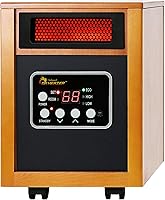
This 1,500-watt cabinet heater has high and low settings, a thermostat, a remote, and a 12-hour automatic shut-off timer. Its stated coverage is 576 square feet, and its caster wheels help when you need to reposition it while it is off and cool.
It may suit someone who wants controls from a chair and a unit that can move between areas. Skip it if you need heat in several closed rooms at once, or if its cabinet shape would block a narrow path.
The timer does not make it suitable to leave running while you sleep or leave the room.
If you are choosing between radiant and fan-driven warmth, the guide to how infrared heaters work explains the difference. A larger product comparison is available in our guide to space heaters for basements.
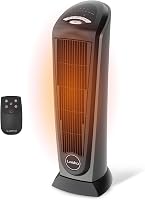
The 29.5-inch ceramic tower has two heat settings, oscillation, a remote, and an 8-hour timer. Its 7.9-pound weight and carry handle make it easier to move than a heavy radiator, but set it on a level surface where it will not get bumped.
Choose another style if you want silent, fan-free heat or if a tower would stand in a busy walkway. This model moves air, so think through where the airflow will go and whether the cord can stay out of foot traffic.
How can you reduce cold drafts around basement windows?
Seal suitable window drafts before asking a space heater to compensate for cold air. A window film kit can add a temporary barrier on clean, dry windows with painted or finished wood, aluminum, or vinyl surfaces.
The kit includes two rolls of film and two rolls of tape. Cut the film to size after applying it, then use a hair dryer to shrink it into place.
Follow the installation directions and avoid applying it to damp or unsuitable surfaces.
Window film can help with air leaks, but it does not repair a moisture problem or replace appropriate basement insulation. The Department of Energy’s basement insulation guidance covers air sealing and insulating basement walls in a conditioned space.
If the room smells musty or has persistent dampness, address the moisture source before relying on a heater.
How should you set up and use a basement heater?
Set a portable heater on a level, hard surface with at least 3 feet of clear space around it. Keep it away from curtains, bedding, furniture, paper, water, and busy walkways.
Plug the heater directly into a wall outlet. The Consumer Product Safety Commission’s heater guidance advises against extension cords and power strips.
Keep the cord where no one can trip over it.
Use the controls and safety features as described in the heater’s manual. Some models include timers or automatic shut-off features, but turn the heater off whenever you leave the room or go to sleep.
Keep smoke alarms working, and do not place a heater near water or where it could be knocked over.
Let the heater cool before moving it, and keep its air openings clear. Check the cord and plug before use.
If the breaker trips, the plug or outlet feels hot, or the heater smells unusual, stop using it and resolve the cause before turning it on again.
What mistakes make basement heating less effective?
The common mistake is expecting one portable heater to fix a cold, damp, or poorly insulated basement. A heater can warm an occupied zone, but it cannot stop drafts or solve moisture problems.
Avoid these habits:
- Heating empty rooms: Close doors to areas you do not use when practical, and focus on the room where you spend time.
- Placing the heater in a traffic path: Choose a stable location where people will not bump it and the cord will not create a trip hazard.
- Using an extension cord or power strip: Plug directly into a wall outlet and pay attention to other equipment on the same circuit.
- Blocking airflow: Keep furniture and stored items clear of the heater and its openings.
- Ignoring the source of cold air: Check windows and exterior doors before turning up the heat or adding another heater.
- Running a heater unattended: Turn it off when you leave or go to sleep, even if its timer or safety features are available.
When a breaker trips, do not keep resetting it and restarting the heater. Read why a space heater may trip a breaker and get qualified help if the cause is unclear.
How to choose a basement heating plan
Choose the De'Longhi for quiet heat near a regular seat, the DR-968 for a movable heater with remote controls, and the Lasko tower for airflow across a finished room. Add the Duck film kit when suitable windows are a clear source of drafts.
For occasional use, heat the room you occupy and reduce cold air entering through windows and doors. For warmth across multiple rooms or steady whole-basement heat, consider the insulation and permanent heating setup instead of buying several portable heaters.
Use our basement space heater guide to compare more options. If a single 1,500-watt unit is your likely choice, see how to choose a 1,500-watt space heater and check the electrical load before plugging it in.
Frequently asked questions
Can a space heater heat an entire basement?
One portable heater can warm the area around it, but may not keep a large, divided, or drafty basement comfortable throughout. Start with the room you use most, close doors where practical, and reduce drafts.
If you need steady heat across several rooms, consider a properly planned permanent heating solution.
Where should I put a space heater in a basement?
Place it on a level, hard surface in the area you occupy, with at least 3 feet of clear space from furniture, curtains, bedding, paper, and other items that can burn. Keep it away from water, walkways, and damp spots, and follow the heater’s instructions.
Can I use an extension cord for a basement space heater?
No. Plug an electric space heater directly into a wall outlet, not an extension cord or power strip.
A basement outlet may share a circuit with other equipment, so stop using the heater if the breaker trips or the plug or outlet feels hot, and get qualified help.
Should I run a space heater in a basement overnight?
Turn a portable space heater off when you leave the room or go to sleep. Keep smoke alarms working, and never use a heater near water or where it can be knocked over.
A heater’s timer or safety features don't replace staying nearby and following its manual.