Dr Infrared DR-978 vs DR-968 Heaters: Which Is Better? (October 2026)
Choose the DR-968 for caster wheels and its larger stated coverage, or the DR-978 for a compact, lighter cabinet and a specified low setting. The Dr Infrared heater DR-978 vs 968 choice comes down to room fit, moving the heater and how you want to control heat.
On this page (10 sections)
- Dr Infrared DR-978 vs DR-968: what is the main difference?
- Which heater fits your room and floor space?
- How do the DR-978 and DR-968 heat settings compare?
- Which controls and safety features matter in daily use?
- What should you do before setting up either heater?
- How should you care for and use these heaters?
- Which mistakes can lead to the wrong choice?
- Who should choose the DR-968?
- Who should choose the DR-978?
- How do you decide between the DR-978 and DR-968?
Choose the DR-968 for caster wheels and its larger stated coverage, or the DR-978 for a compact, lighter cabinet and a specified low setting. This Dr Infrared heater DR-978 vs 968 comparison comes down to room fit, portability and how you want to control heat.
Both are freestanding electric heaters with hybrid infrared and PTC heating. Each has a remote, thermostat, 12-hour timer, tip-over protection and overheat shut-off.
The key differences are cabinet size, weight, stated coverage and heat settings. The DR-968 is larger and rolls on caster wheels, while the DR-978 is easier to lift and gives you a stated 1,200-watt low setting.

Dr Infrared DR-978 vs DR-968: what is the main difference?
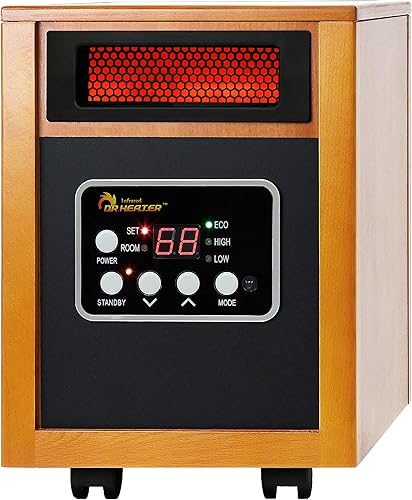
The DR-978 takes up less space and specifies a 1,200-watt low setting; the DR-968 has caster wheels and a larger stated coverage figure. Both reach 1,500 watts on high and include a 12-hour timer.
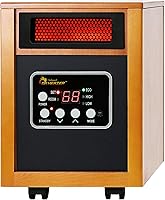
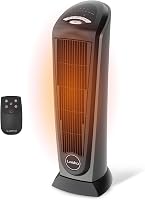
The DR-968 measures 13 x 11 x 16 inches and weighs 19 pounds. The DR-978 measures 10 x 9 x 12 inches and weighs 10 pounds.
Their stated coverage figures are 576 square feet for the DR-968 and 400 square feet for the DR-978. Use these as a starting point, not a guarantee that either heater will warm every room of that size evenly.
Which heater is easier to move?
The DR-978 is easier to lift, while the DR-968 is easier to roll across a suitable floor. Pick based on the kind of moving you expect to do.
At 10 pounds, the DR-978 is the more convenient choice if you plan to carry a heater between rooms or put it away between uses. Its smaller cabinet may also be easier to place in a tight spot, provided the space meets the manual's clearance directions.
The DR-968 weighs 19 pounds but includes caster wheels. They can help when you reposition it on one level, though the larger cabinet still needs room wherever it operates.
Which heater fits your room and floor space?
The DR-978 suits tighter floor plans, while the DR-968 is worth considering when its larger coverage figure fits your room. Measure the intended location and allow the clearance its manual requires.
The DR-978's 10 x 9 in footprint is smaller than the DR-968's 13 x 11 in footprint. That can make it easier to position beside a desk or in a room where floor space is limited, but it still needs open space around it.
For a more open area, the DR-968's 576-square-foot stated coverage may be a better match than the DR-978's 400-square-foot figure. A large, drafty room or a room with high ceilings may still feel different from a compact, insulated one.
Think about where you need warmth, too. A heater placed near a seated area may serve your routine better than choosing by the room's total square footage alone.
Our guide to how infrared heaters work explains the heating approach and what to expect from radiant warmth.
How do the DR-978 and DR-968 heat settings compare?
The DR-978 specifies 1,200 watts on low and 1,500 watts on high, with Eco mode as another option. The DR-968 has high and low features, but no separate low wattage is specified here.
With the DR-978, you can choose its lower setting when full output isn't needed. Eco mode is also available, and the thermostat range is 50–85°F.
The DR-968 also has an electronic thermostat with a 50–85°F range. Its energy-saving model has high and low features, but the exact low setting isn't specified, so check the manual if you need to compare power use at that setting.
Both models draw 12.5 amps at their stated maximum. Before plugging one in, consider what else shares the circuit.
Our guide to how many amps a space heater uses explains why circuit capacity matters, and our advice for a space heater tripping the breaker covers what to check if a breaker trips.
Which controls and safety features matter in daily use?
Both heaters include a remote, thermostat, timer, tip-over protection and overheat protection. The DR-978 adds a specified low setting and Eco mode; the DR-968 adds caster wheels and a lifetime filter.
The remote lets you adjust settings without reaching the cabinet. The thermostat regulates the target temperature, and the 12-hour timer lets you set an automatic shut-off period.
The DR-968 has a stated blower noise level of 39 dB. The DR-978 has a larger, low-noise blower, though a numeric noise figure isn't specified.
Place either heater on a stable surface, keep objects away from its airflow and follow the manual's clearance directions. Tip-over and overheat protection are useful safeguards, but careful placement still matters.
See our guide to what tip-over protection does on a space heater for a fuller explanation.
What should you do before setting up either heater?
Choose a clear, stable location near a suitable outlet, then read the manual before turning the heater on. Leave space around the cabinet and keep its airflow unobstructed.
Start by measuring the floor space where you plan to use the heater. Check the manual for placement and clearance rules, then position the heater away from curtains, bedding, furniture and anything else that could block airflow or come too close.
Both heaters draw up to 12.5 amps, so avoid assuming that any outlet will work just because the plug fits. Consider other devices on the same circuit, and don't use an extension cord unless the manual specifically allows it.
If you move the DR-968, roll it only across a suitable surface and place it securely before use. Lift the lighter DR-978 carefully rather than dragging it by its cord.
How should you care for and use these heaters?
Keep the heater's air path clear and follow its manual for cleaning and filter care. Unplug it and let it cool before handling or cleaning it.
The DR-968 includes a lifetime filter, so check its manual for how to inspect and care for it. Keep dust and objects from building up around either heater's intake and outlet, and don't cover the cabinet while it is operating.
Use the thermostat and timer to match your routine instead of leaving the heater on without a plan. If you change rooms, check the placement again and make sure the heater sits level with open space around it.
For general upkeep, see how to clean a space heater. Use the model's manual for any cleaning steps specific to its filter or cabinet.
Which mistakes can lead to the wrong choice?
The most common buying mistake is treating a coverage figure as a guarantee or assuming the two models have identical low settings. Compare your room and routine with the features each heater actually specifies.
Don't buy the DR-968 only because its coverage figure is higher if you have little floor space or need to carry the heater often. Its wheels help with rolling, but its cabinet is larger and it weighs 19 pounds.
Don't assume the DR-968's low setting uses the same wattage as the DR-978's 1,200-watt low setting. If that detail affects your decision, check the DR-968 manual before buying.
The DR-978 is not automatically the right choice for every small room. Leave required clearance, consider drafts and room layout, and make sure its 400-square-foot stated coverage aligns with your needs.
Who should choose the DR-968?
Choose the DR-968 if you want caster wheels, a larger cabinet heater and its 576-square-foot stated coverage. It fits buyers who will mostly move the heater on one level and prefer rolling it to lifting it.
The remote, thermostat, 12-hour timer and stated 39 dB blower level are useful details for a heater that stays in regular use. Its larger footprint and 19-pound weight make it less suited to tight floor space or frequent carrying.
Read our Dr Infrared DR-968 heater review if you want a closer look at that model.
Who should choose the DR-978?
Choose the DR-978 if you want a smaller cabinet, lower weight and a specified low-wattage option. It's the clearer fit for someone who may carry the heater between rooms or wants high, low and Eco modes.
Its stated coverage is 400 square feet, so compare that figure with your room and consider drafts, insulation and ceiling height. The DR-978 has no caster wheels specified, which is less convenient if you prefer rolling a heater rather than lifting it.
If the room is bigger or you want to compare more options, browse our best infrared heaters for indoor use and our guide to infrared heater vs space heater.
How do you decide between the DR-978 and DR-968?
Pick the DR-968 if you want caster wheels and its larger stated coverage; pick the DR-978 if compact size, lower weight and a specified low setting matter more. This Dr Infrared heater DR-978 vs 968 choice is easiest when you start with your room and how you plan to move the heater.
Both offer 1,500 watts on high, a remote, a timer and shut-off protections. The DR-968 is the better fit for buyers who want to roll a larger cabinet heater around one level, while the DR-978 is the more practical option when lifting and floor space matter.
For a closer comparison with other radiant options, start with the infrared and radiant heaters guide.
External sources: Dr. Infrared Heater and [U.S.
Consumer Product Safety Commission space heater safety guidance](https://www.cpsc.gov/Safety-Education/Safety-Education-Centers/Space-Heaters).
Frequently asked questions
What is the difference between the Dr Infrared DR-978 and DR-968?
The DR-978 is smaller and lighter, with 1,500-watt high and 1,200-watt low settings plus Eco mode. The DR-968 is a larger cabinet heater with caster wheels and a 12-hour timer.
Both have a remote, thermostat, tip-over protection and overheat shut-off.
Choose based on the room, floor space and controls you need.
Which Dr Infrared heater is smaller?
The DR-978 is smaller at 10 x 9 x 12 inches and weighs 10 pounds. The DR-968 measures 13 x 11 x 16 inches and weighs 19 pounds.
Plan for open space around either heater as its manual directs.
Cabinet dimensions alone don't show the clearance needed for safe placement.
Can the DR-978 run on low?
Yes. The DR-978 has a 1,200-watt low setting, a 1,500-watt high setting and Eco mode.
The DR-968 has high and low features, but its low wattage isn't specified here.
Check its manual if the exact setting matters to your decision.
Do the DR-978 and DR-968 have tip-over protection?
Both models are described with tip-over and overheat protection. Set either heater on a stable surface and follow the manual's placement and clearance directions.
These features don't replace careful supervision or keeping the heater away from curtains, furniture and other items.
Which Dr Infrared heater is better for a large room?
The DR-968 has a stated coverage of 576 square feet, compared with 400 square feet for the DR-978. Those figures aren't a promise of equal warmth in every room.
Insulation, ceiling height, drafts and room layout affect comfort, so consider those conditions along with the coverage figures.